Girls' education program
In this district, a girl’s education competes with her bride price. Covering tuition fees and providing scholastic materials is only one side of the challenge; the other is to change what her family believes her schooling is worth.
Cultural barriers to educating girls
Wealth and standing here are measured in cattle, not in schooling, and a daughter’s marriage brings cattle in. Girls undergo FGM, sometimes as early as eleven, and are married off soon after. Both are against Tanzanian law and both still happen.
Those who stay in school often cannot manage their periods without water or supplies, and miss a week of every month until missing becomes leaving.
In Arusha Region, 43% of women have undergone female genital mutilation. Nationally the figure is 8%.Tanzania Demographic and Health Survey 2022

What we do
- Secondary school scholarships. Eighty girls supported through secondary school in 2026.
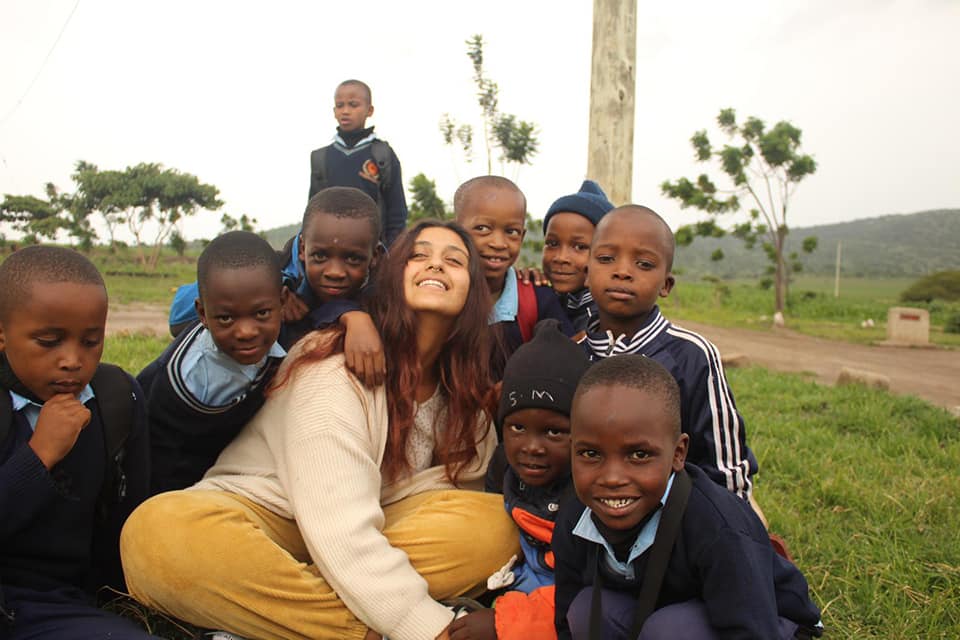
- Girls’ clubs in public secondary schools at Sale, Loliondo, Samunge and Digodigo — a regular, protected space with an adult on their side.
- Health, hygiene and well-being support, including the supplies that decide whether a girl attends every week of the month.
- Meetings with parents and guardians, because a scholarship a family does not agree with does not survive the dry season.
- Community sensitisation with village leaders and elders across six villages.
- A residential empowerment camp, held at the school.


Hodari Education Foundation
The girls’ programme is delivered under the Hodari Education Foundation, a community-based organisation that falls under the MACAO umbrella. The same people are behind it, just a separate organisational entity!
Hodari Education Foundation has been fortunate enough to receive consistent funding by GRic Africa for the past years. This grant covers basic activities; however extra funding is always needed.
New goals for 2027
01
Young women
Nationally, 25,971 girls were expelled from school for pregnancy between 2017 and 2020. In 2023, 1,046 were brought back into formal education. The right to return exists on paper and almost never in practice. In 2027 we are setting up to support these young women in their endeavours.
02
Public school quality
We want to find out what children in this district’s public pre-primary classes can actually read and count, because nobody has ever measured it. We aim to verify good education in remote public schools and ensure good teachers and scholastic materials are present.
